Присоединяйтесь к сообществу:
  • tweetter
  • mail

Инициативы

5 key areas of intervention

During the period 2019–2020, the following five main intervention areas were envisaged in the Action Plan for the organization of the International Year and relevant initiatives were launched. A list of initiatives is available below:

1. Increasing understanding, reconciliation and international cooperation

This initiative aims to increase understanding, reconciliation and international cooperation among different stakeholders. This can be accomplished through coordinated advocacy and awareness-raising programmes focused on upholding and reinforcing the human rights of indigenous language speakers. In turn, this involves deploying necessary resources and robust data through national statistics institutions in accordance with the United Nations Declaration on the Rights of Indigenous Peoples, the 2030 Agenda for Sustainable Development, and other international and national laws related to indigenous peoples and multilingualism, as well as other relevant normative instruments and strategies.
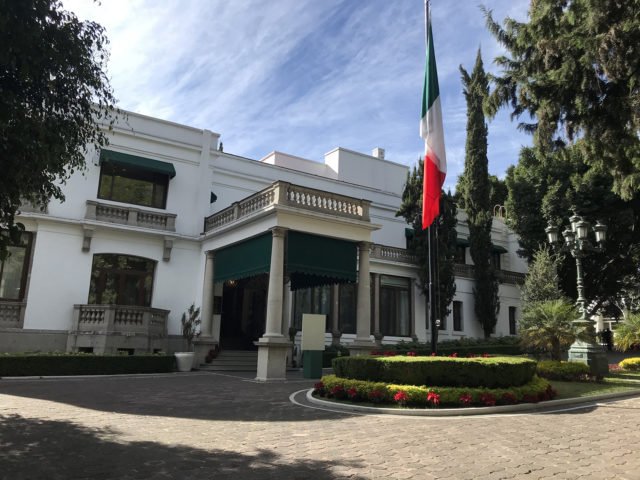
High-level event “Making a Decade of Action for Indigenous Languages” and the Los Pinos Declaration

Date: from 27 to 28 February 2020, Los Pinos Cultural Complex, Mexico City, Mexico 

UNESCO and the Government of Mexico, in cooperation with a range of national, regional and international partners, organized a high-level event entitled “Making a Decade of Action for Indigenous Languages”, which took place from 27 to 28 February 2020, on the margins of the International Congress on Languages at Risk from 25 to 26 February 2020 in Mexico City, Mexico. Detailed analysis of the Year’s outcomes provided a solid basis for the prioritization and identification of future strategies and working modalities, securing the commitment of key stakeholders and the necessary funding. The high-level event also generated a Los Pinos Declaration (Outcome Document), which presents key milestones for the elaboration of the Global Action Plan for the International Decade.

Programme – Read More 

Los Pinos Declaration in English, Spanish, French


High-level event for the closing of the 2019 International Year of Indigenous Languages

Date: 17 December 2019, UN Headquarters, New York, United States of America

On Tuesday 17 December 2019, the President of the UN General Assembly convened a High-Level Event to close the 2019 International Year of Indigenous Languages in New York, in line with General Assembly resolution 73/156. The event was organized in collaboration with UNESCO and UNDESA.

Programme –Read more

International Conference Language Technologies for All (LT4All)

Dates of event: 4-6 December 2019, UNESCO Headquarters, Paris, France

Within the framework of the 2019 International Year of Indigenous Languages, a three-day International Conference was organized at UNESCO Headquarters in Paris, France between the 4the and the 6th of December 2019. The event contributed to the promotion of human rights and to the recognition of the fundamental freedom of all language users to access information and knowledge in languages that they understand best. It also aimed to encourage all relevant stakeholders to take concrete measures for the promotion of linguistic diversity and truly multilingual internet and language technologies, with a special focus on indigenous languages.

Official website

Special Event: The Indigenous Peoples Atlas of Canada

Date: 18 November 2019, UNESCO Headquarters, Paris, France

Within the framework of the International Year of Indigenous Languages, the Communication and Information Sector of UNESCO and the Permanent Delegation of Canada to UNESCO held a special event in the UNESCO Library (UNESCO Headquarters, Paris, France) on Monday the 18th of November 2019.

The IYIL2019 aimed to draw attention to the critical loss of indigenous languages and the urgent need to preserve, revitalize and promote them, and to encourage the rollout of further urgent measures at the national and international levels.

Delegates were invited to attend the donation ceremony, by which the Permanent Delegation of Canada to UNESCO provided a copy of the Indigenous Peoples Atlas of Canada, which was then made available for public consultation and use in the UNESCO Library.

Read more

Launch of the IYIL2019/UNESCO Stamp

In September 2019, UNESCO, in cooperation with La Poste (France), has launched the official stamp dedicated to the 2019 International Year of Indigenous Languages. The IYIL2019 stamp features the stand-alone logo of the International Year and aims to contribute to its visibility and promotion. It can be purchased in all post offices in France, as well as online.

Read more

9 August 2019 – International Day of Indigenous Peoples

The 9th of August 2019 marked a special day dedicated to indigenous peoples, their human rights, languages, ancient histories, and rich cultures. Several activities were held throughout the world to celebrate. UNESCO, as lead agency for the implementation of the International Year of Indigenous Languages, launched a global social media campaign for the promotion of the day, including circulation of the Director General’s Message and launch of a dedicated video. Several Field Offices also organized relevant initiatives for the promotion, revitalization and support of indigenous languages, including the Bangkok, Brasilia, Mexico City, Quito Offices. A special commemorative event was also held at United Nations Headquarters in New York.

Read more

Side Event on IYIL2019 – UNPFII 2019

Date of event: 23 April 2019, United Nations Headquarters, New York, United States of America

As a result of the United Nations General Assembly’s proclamation of the International Year of Indigenous Languages (Resolution A/RES/71/178) in 2016, progress has been made on raising awareness on the critical loss of indigenous languages around the world. The Action Plan for the organization of the International Year in 2018 called for a coherent approach and for collaborative action by all stakeholders to achieve maximal positive impact and social change. UNESCO, serving as the lead organization for the International Year, in cooperation with members of the Steering Committee for the organization of the International Year, organized a side event to review achievements of the first quadrimester and to sharpen ongoing discussions on immediate actions required of all stakeholders for the implementation of the International Year. The side event was attended by the representatives of Member States, members of the UN Permanent Forum, indigenous peoples, research and civil society organizations, UN-system entities and other partners. The discussion led to new insights for participants on partnership opportunities, upcoming events and initiatives.
Read more

High Level Dialogue ICT 4 ALL: Indigenous Languages Matter for Peace, Innovation and Development’, WSIS Forum 2019

Date: 10 April 2019, International Telecommunication Union (ITU) Headquarters, Geneva, Switzerland

The High Level Dialogue provided space for open consultations and encouraged discourse on the important role that indigenous languages play in promoting sustainable development, in particular when ICTs are made accessible, inclusive and affordable for all, including indigenous language users. Indigenous languages are imbued with invaluable potential and deeply-rooted knowledge, which must be given its rightful space on the global stage in order to contribute to development and innovation in domains such as education, science and research, culture, policy, industry and environment.
Read more

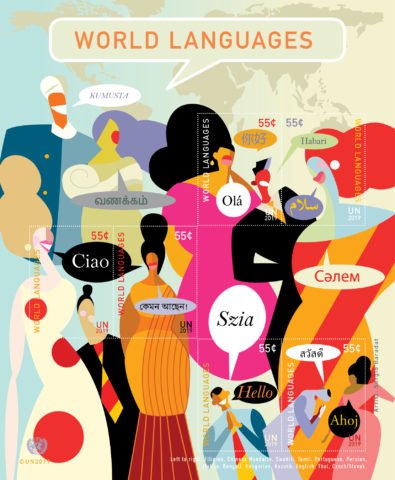
United Nations Postal Administration issues World Languages stamps to commemorate International Mother Language Day

21 February 2019

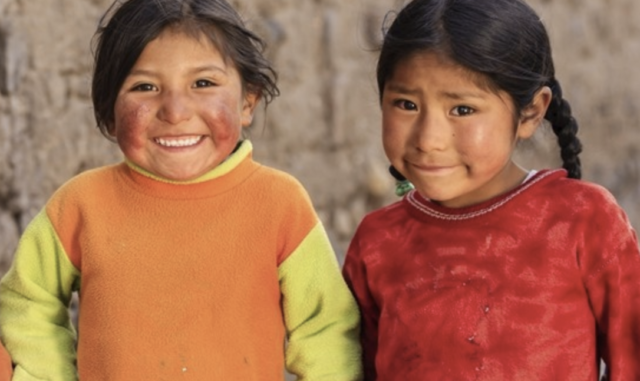
In observance of International Mother Language Day, the United Nations Postal Administration, (UNPA) issued three mini-sheets of six stamps to honor the world’s languages. The stamp sheets feature greetings in 41 languages and they were designed by Sergio Baradat (United Nations).
Read more – UN Stamps

Hadynyah / iStock / Getty Images PlusInternational Mother Language Day

Date: 21 February 2019

The idea to celebrate International Mother Language Day came from an initiative on the part of Bangladesh. It was approved at the 1999 UNESCO General Conference and has been observed throughout the world since 2000. UNESCO believes in the importance of cultural and linguistic diversity for sustainable societies.

Read more

Copyright: UNUN General Assembly Launch Event for the 2019 International Year of Indigenous Languages

Date: 1st February 2019, United Nations Headquarters, New York, USA

The President of the United Nations General Assembly convened a High-Level meeting of the General Assembly to launch the 2019 International Year of Indigenous Languages. The meeting took place on on the 1st February 2019, in the General Assembly Hall.

Read more

Official Global Launch Event of IYIL2019

Date: 28 January 2019, UNESCO House, Paris, France

This official launch event was co-organized by UNESCO, UNDESA, and the members of Steering Committee for the organization of the International Year of Indigenous Languages, with the participation of other relevant stakeholders. Under the theme “Indigenous languages matter for sustainable development, peace building and reconciliation”, the event gathered high-level governmental officials, indigenous peoples, civil society, academia, media, information and memory organizations, United Nations agencies, public language harmonization and documentation institutions, and private sector bodies.

Concept Note and Agenda – Photo Gallery – Read more

2. Creation of favourable conditions for knowledge-sharing and dissemination of good practices

This initiative is aimed at delivering support, through the development of improved tools, contents and services, to various agents in the sharing and enhancement of information, research and understanding about indigenous languages. These measures are conditional, and vary with the involvement and active participation of the representatives of such languages and knowledge. Furthermore, it seeks to stimulate collaboration between relevant stakeholders in monitoring progress across all relevant fields, which will be facilitated through improved data collection and evaluation.

First UNESCO Bulletin on Indigenous Peoples and the COVID-19 Pandemic

Date: 9 August 2020, International Day of Indigenous Peoples 

UNESCO’s first bulletin on indigenous peoples highlighted the resilience of indigenous individuals and communities in the face of the COVID-19 pandemic. This bulletin showcased the important work carried out throughout this global crisis to prioritize indigenous issues. The UNESCO Intersectoral Working Group on Indigenous Peoples Issues played an essential role this year in supporting cultural diversity and human rights, in line with the longstanding missions of UNESCO.

Read more 

COVID-19 Pandemic: Language Matters

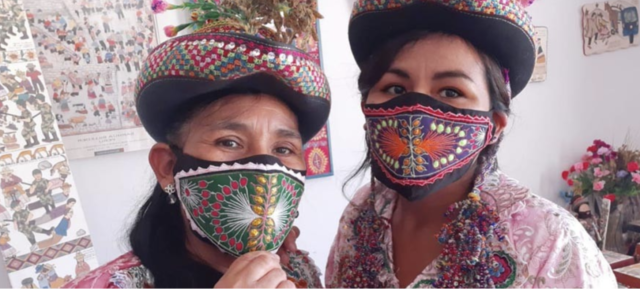
The Secretariat of the 2019 International Year of Indigenous Languages (IYIL2019) created a dedicated web page entitled “COVID-19 Pandemic: Language Matters”. It includes a collection of resources in and about indigenous languages with a particular emphasis on COVID-19 prevention. Messages disseminated included public health recommendations, statements and policy-guidelines issued by several UN agencies and other organizations, and information about relevant initiatives aiming to tackle the negative impact of the pandemic on indigenous communities worldwide.

Read more 

Summary Report of the IYIL2019

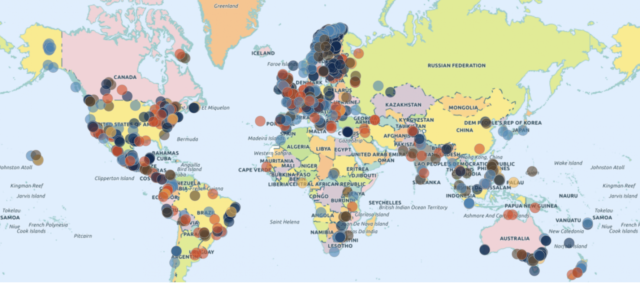
A summary report of activities carried out during the 2019 International Year of Indigenous Languages (IYIL2019) was released by the UN Permanent Forum on Indigenous Issues (UNPFII), providing an overview of key activities carried out by international, regional, national and local institutions in 78 countries, coordinated by UNESCO, the lead agency for the implementation of the International Year.

Read more – Available in 6 UNESCO languages

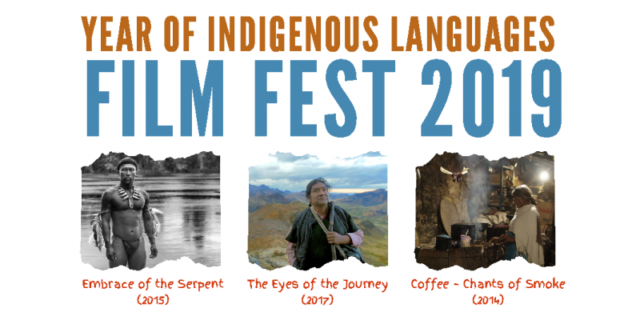
Film Fest 2019

Date: 27 September 2019, Bangkok, Thailand

An Amazonian shaman searches for a sacred plant with two scientists; a spiritual master who converses with nature appears and reappears like a ghost in different regions of the Cordilleras Mountains; and a Nahuatl family struggles as they prepare to honor the death of a family member. These are just some of the main premises of several films that were shown at the International Year of Indigenous Languages Film Fest 2019, which was held at the Cinema Oasis movie theatre in Bangkok, Thailand on the 27th of September 2019.

Read more

Online Indigenous Film Festival of Latin America and the Caribbean

Date: 3-14 June 2019, UNESCO House, Paris, France

The countries from Latin America and the Caribbean together with UNESCO are launching an Online Indigenous Film Festival (OIFF) within the context of the International Year of Indigenous Languages 2019 (IYIL2019) and of the upcoming Latin American and the Caribbean Week, which took place between the 3rd and 7th of June 2019 at UNESCO Headquarters (Paris, France).  “68 Voices”, a series of creative animated indigenous stories, was released on the dedicated website of IYIL2019.

Read more

Indigenous Community Media

Community media outlets provide a platform for discussion and can give a voice to marginalized populations, including many indigenous groups. They tend to focus on local issues, their programming addresses the topics most relevant to their listeners, and they are usually broadcast in traditional dialects to ensure that facts are accurately passed on and the audience can actively participate. As such, this type of media is well-suited to the transfer of cultural knowledge, as it gives communities the ability to exchange information in their own language.

Read more

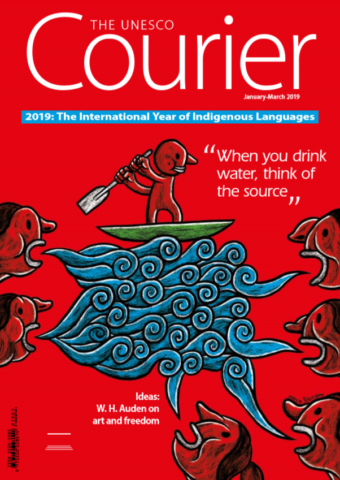
The UNESCO Courier on Indigenous Languages and Knowledge (IYIL 2019)

Date of publication: January 2019

Most indigenous languages are in danger despite the fact that they comprise essential knowledge channels providing original solutions to contemporary challenges. “The major influence on the sorry state of indigenous languages is the fact that indigenous peoples are threatened themselves,” says Minnie Degawan (Igorot, Philippines) in her introductory article. “In the Philippines, the government has launched the use of mother tongues in schools, but no resources are available in terms of teachers and learning materials to allow for indigenous children to be taught in their mother tongues,” she explains.

The designation of 2019 as the International Year of Indigenous Languages (IY2019 (link is external)) gives us the opportunity to review issues related to indigenous languages and knowledge in other latitudes as well: among Fijians in the Pacific, the Dong in China, the Sámi in Swedish Lapland, the Bahima in Uganda, the Maori in New Zealand and the Mixtec in Mexico.

Read more

3. Integration of indigenous languages into standard-setting

Elaborated with the aim of strengthening national and regional capacities to assess and mainstream indigenous languages and, as far as possible, to integrate them into national policies, strategic plans and regulatory frameworks.

The Los Pinos Declaration [Chapoltepek]
The Los Pinos Declaration [Chapoltepek] is the outcome of the High-level closing event which was organized by UNESCO and the Government of Mexico, in cooperation with regional, national and international partners, on 27 and 28 February 2020 at the former presidential palace of Los Pinos in Mexico City, Mexico.

The Outcome Document presents the key outcomes and lessons learned from the IYIL2019, as well as the milestones jointly identified for the elaboration of the Global Action Plan for the International Decade of Indigenous Languages (2022-2032), which was proclaimed by the United Nations General Assembly on 18 December 2019.

Read more – Available in French, Spanish and English 

Strategic Outcome Document of the IYIL2019

The Strategic Outcome Document of the International Year of Indigenous Languages (IYIL2019) intends to inform Member States of the progress made as a follow up to the UNGA resolution and in the implementation of the Action Plan for organizing the 2019 International Year of Indigenous Languages. The document summarizes the outcomes of the consultative process launched by UNESCO and the Steering Committee for the organization of the International Year of Indigenous Languages. It also provides information on UNESCO’s role and specific contribution with regard to the organization of the International Year of Indigenous Languages.

Read more – Available in 6 UNESCO Languages

Yuelu Proclamation on the Protection and Promotion of Linguistic Diversity of the World
The purpose of the international conference was to review the status and situation of language diversity in the Asia-Pacific region, as well as to explore new avenues for language resource protection, support and promotion worldwide. Languages represent an undeniable component of human rights, and preventing their endangerment contributes to safeguarding people’s right to education, their capacity to access information and knowledge, and to participate in society. This conference aimed to contribute to the long-term objective of building a global community with a shared future, and of developing pluralistic, equitable, open and inclusive societies. An outcome summary document was elaborated to explain the key issues identified during the conference, and to provide policy recommendations in the Asia-Pacific region.

Read more

Action plan for organizing the 2019 International Year of Indigenous Languages

UNESCO worked with governments, indigenous peoples’ organizations, researchers and other stakeholders to elaborate an action plan which sets out the path to achieving the objectives of the International Year. This multi-stakeholder partnership is made up of a Steering Committee to oversee implementation, ad hoc groups to provide relevant advice, and contributing partners. The action plan laid out the key measurable objectives, principles and actions to be taken during the year and afterwards.

Read more

4. Empower through capacity-building

It is crucial to expand educational capacities so as to provide more equitable and inclusive access to education in areas where indigenous languages and traditional knowledge systems feature prominently. These improvements are to be derived from new and open educational resources associated with relevant learning strategies, progressive teaching methods and teacher education, and a wide range of language tools and materials, from traditional methods to cutting-edge information and communications technology solutions.

Project-Based Training and Mentoring Program on IP for Women Entrepreneurs from Indigenous Groups and Local Communities
WIPO is launching a new training and mentoring program aimed at strengthening the capacity of women entrepreneurs from indigenous groups and local communities to make strategic and effective use of intellectual property (IP) rights, in support of projects based on traditional knowledge (TK) and traditional cultural expressions (TCEs).

Read more

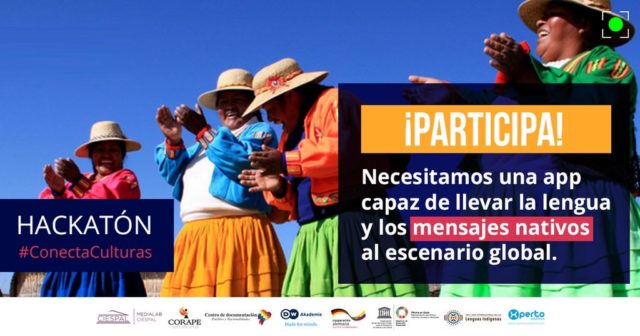
Hackathon #ConectaCulturas

Date: 26-28 July 2019, Centro Internacional de Estudios Superiores de Comunicación para América Latina (CIESPAL), Quito, Ecuador

The Virtual Documentation Centre of the Peoples and Nationalities of Ecuador serves as a meeting point for existing research material from various sources and institutions. It acts as a link to virtual libraries on related subjects and encourages the publication of research that has not been digitized, as well as new productions narrated by representatives of indigenous cultures themselves.

Read more

Hackathon on #Indigenous Languages

Date: 15-17 March 2019, Lifelong Learning Institute, Singapore

Dawn Bouttasing grew up in Phonsavanh, Laos, with a family that mainly spoke Khmu, one of the many indigenous languages of Laos. Her father set a rule that she and her siblings had to always speak Khmu with their parents, no matter where they were, and Dawn was taught to be proud of her Khmu heritage and traditions.

UNESCO and FOSSASIA organized the Hackathon for Promoting Indigenous Languages through Free and Open Source Software, between the 15th and the 17th of March 2019 during the FOSSASIA Summit 2019 in Singapore. The event laid out two main objectives:

  1. To raise awareness among young developers and free and open-source software communities on the importance of indigenous languages and language technologies to protect these languages.
  1. To develop innovative ideas and prototypes for open-source technological solutions for promoting indigenous languages in the region.
Photo gallery – Read more

5. Growth and development through elaboration of new knowledge

It is essential to engage and encourage the global academic and scientific community in recognizing and utilizing the value of intellectual assets presented by the cultural and linguistic heritage of indigenous peoples, both for their own benefit and for society more broadly on a national, regional and global scale.

New UNESCO World Atlas of Languages

In 2020, UNESCO launched an online platform for the World Atlas of Languages, a repository for linguistic diversity and multilingualism. A global data collection or “Survey of World Languages” was initiated by UNESCO in close cooperation with the UNESCO Institute of Statistics (UIS) and leading experts.

For the launch of new platform, the methodology was revised and a global data collection process was launched. The data – from more than 1000 languages – was analyzed and integrated into a new technical platform which provides a number of new features for collaborative work, knowledge and content sharing, providing a space for the online community.

Arabic Atlas of Languages

UNESCO’s Communication and Information Sector launched the development of the Arabic Atlas of Languages. It will function as an integral part of a broader global effort, namely the UNESCO World Atlas of Languages, to encourage collaboration among different stakeholders for the promotion of cultural and linguistic diversity in Arab speaking countries and within the community of Arabic language experts and users. It will also serve as a tool to monitor the progress made in Arabic speaking countries, to build institutional capacities, raise awareness among larger communities of language speakers and strengthen international cooperation.

UNESCO World Report of Languages

In 2021, UNESCO published a global report on the status of languages, on the basis of the Global Survey on Languages carried out by UNESCO and the UNESCO Institute for Statistics, in cooperation with UNESCO Member States. The Report includes new information and detailed data on natural human languages, including official and unofficial, spoken as well as signed languages, used around the world. By identifying good practices used by different stakeholders, UNESCO aims to provide evidence-based data for informed decision making and urge to take urgent measures to preserve, support and promote linguistic diversity and multilingualism.

Call for Research Papers within the context of the 2019 International Year of Indigenous Languages

Submissions are closed.

UNESCO launched a Global Call for Research Papers within the context of the 2019 International Year of Indigenous Languages. As the deadline for submissions was extended to 15 March 2019, researchers and practitioners from all over the world specializing in different fields and subject areas were strongly encouraged to submit in order to contribute to the preservation, revitalization and promotion of indigenous languages at the national, regional and international level.

Read more
This collaborative platform was established to enable the community of the International Decade of Indigenous Languages (IDIL 2022–2032) to share events, activities, and resources. The content published on the platform is the responsibility of registered users and does not commit the Secretariat of the Decade (UNESCO) and/or the Members of the Global Task Force for Making a Decade of Action for Indigenous Languages. Please note that the platform has been inactive since February 2025 and no longer accepts new uploads. While work is underway to provide an updated solution, the Secretariat of IDIL 2022–2032 remains available for any inquiries at: indigenous.languages@unesco.org.